
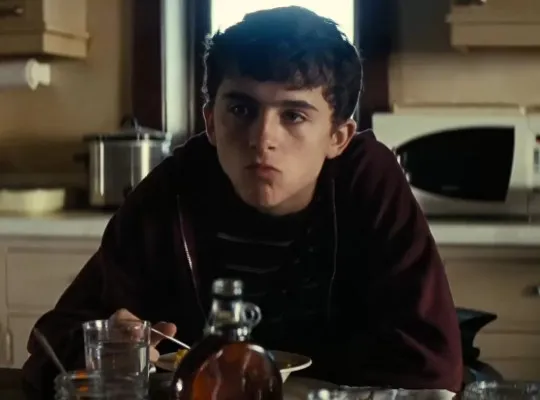
Christopher Nolan's film "Interstellar" was initially envisioned as a heartfelt father-son narrative. During the 2026 Oscar Nominees Luncheon, a surprising discussion took place between Timothée Chalamet and Nolan about the film’s origins. Chalamet revealed his initial enthusiasm upon securing the role, only to be disheartened when he discovered that early drafts of the script featured a much more prominent part for his character. He explained, "The original script, written by Nolan’s brother Jonathan for Steven Spielberg, centered around a father and son relationship. When I googled the project after being cast, I was thrilled—thinking, 'This is it!' But as the script evolved, my character became quite minor." Nolan quickly interjected, saying, "Never believe everything you read online!"
How "Interstellar" Transitioned from Spielberg to Nolan
Nolan explained that the project’s journey began when physicist Kip Thorne approached Steven Spielberg with a concept for a science fiction film rooted in real scientific principles. "Right after finishing 'The Dark Knight,' my brother was approached to collaborate with Spielberg on this project," Nolan shared. "I can call him Steven—though for many, he’s Mr. Spielberg," he joked with Chalamet. "Jonathan dedicated years to developing the script, filled with innovative ideas and multiple revisions. However, progress stalled as long as Spielberg wasn’t ready to move into production. Eventually, he shifted his focus to another project, and the rights for the film became available."
Nolan also spoke about his admiration for his brother’s work. "I was deeply impressed by the first act. At the time, I was contemplating my own time travel projects—some ideas I’d left unfinished. When the script was open for development, I approached Jonathan and asked, 'Would you mind if I adapted it, blending in some of my own concepts and making slight modifications?' He was agreeable to the idea."
Initial Reception and Later Reevaluation
"Interstellar" premiered in November 2014, earning $681 million globally and garnering five Oscar nominations, ultimately winning for Best Visual Effects. Despite its commercial success and critical recognition, the film received a mixed response from critics and certain audiences—especially when compared to Nolan's previous blockbusters like "The Dark Knight" and "Inception." Nolan reflected, "Critics were skeptical, and some audiences didn’t quite connect with it. It might sound egotistical to say they weren’t ready, but honestly, they just weren’t prepared for that kind of storytelling from me at the time."

Yorumlar 0